
HomeHypnotherapy
Hypnotherapy in plain words
No show. Just deep relaxation, with you in charge.
Hypnotherapy is treatment using trance. In trance you are deeply relaxed and your attention turns inward. That is how you reach what keeps your complaint going, and find new solutions.

What is it?
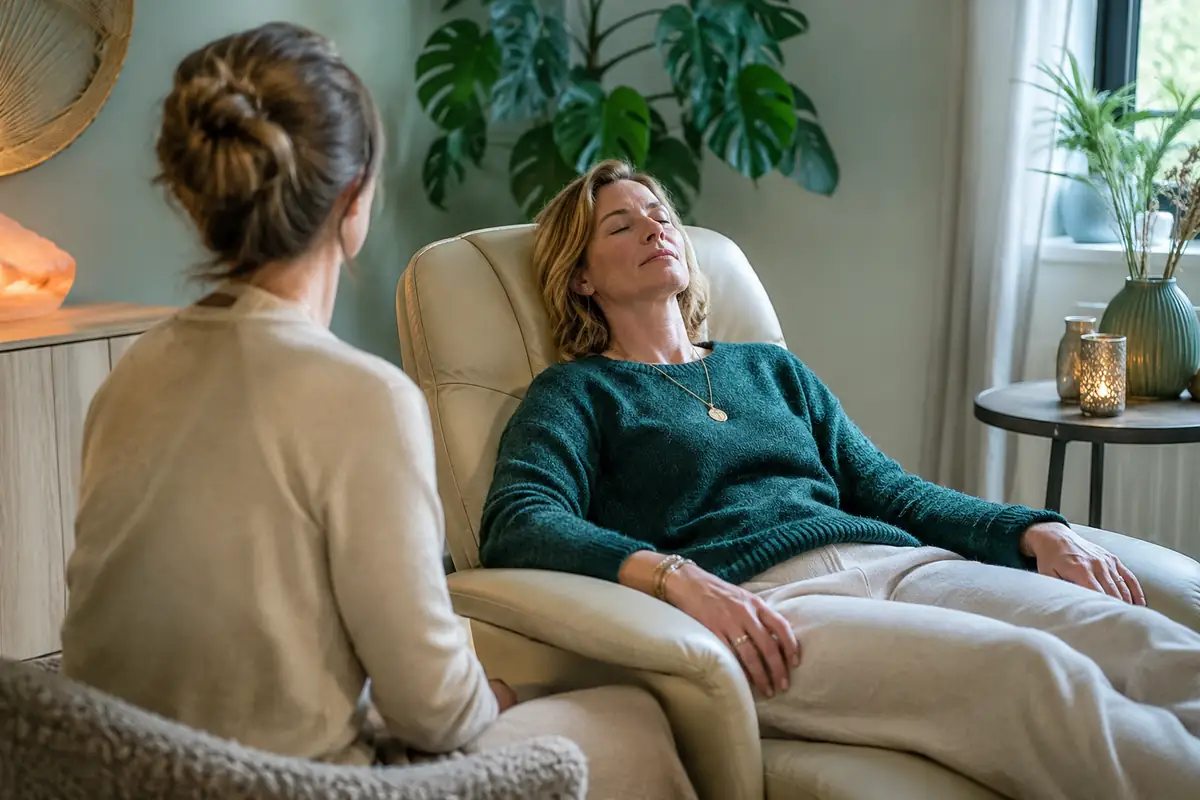
I help you reach a calm, focused state. You hear everything and you can simply talk. In that calm we work on your complaint together, with imagery, conversation and exercises.
What is it not?
Not stage hypnosis like on TV. You do not drift away and you stay in control. You take an active part; I guide.
Will it help me?
Hypnotherapy can help with anxiety, stress, IBS, poor sleep, low self-confidence and more. How well it works depends on your complaint and your effort. In the intake I tell you honestly what I expect.
Myth or fact?
You lose control.You stay in control of your body and your thoughts.Only weak people can be hypnotised.Almost everyone can go into trance. It is like daydreaming or getting lost in a book.One session and you are done.Usually 2 to 8 treatments are needed. We discuss that beforehand.It is airy-fairy.Doctors, dentists and psychologists use hypnosis too. For IBS, hypnotherapy is in the Dutch GP guideline.
Hypnotherapy does not replace medical care. In doubt? Talk to your GP.
Who else uses hypnosis?
Hypnosis is not only something hypnotherapists do. Surgeons, anaesthetists, radiologists, doctors and dentists use it too. In mental health care, psychiatrists, psychologists and psychotherapists work with it regularly.
How a session goes
I help you reach a state of deep relaxation, in which your attention turns inward: to your thoughts and your body. In that calm we look at your complaint together and work towards your goal, with techniques such as regression, parts work, NLP and metaphors. Some techniques, such as EMDR, I use without hypnosis.
My techniques
What I use, explained in one sentence.
Which technique fits, we choose together. Nothing is compulsory.
- Hypnosis / tranceDeep relaxation in which your attention turns inward and you find your inner resources more easily.
- Parts workWe look at the ‘parts’ in you that clash, such as the go-getter and the doubter, and bring them in line.
- Inner-child therapySoftening old pain from your childhood, so that it steers you less today.
- RegressionBack to where a pattern began, to discover that you no longer need it now.
- NLPLooking differently at what you think and say, so that you start to respond differently.
- Metaphors and imageryImages and stories your body understands, for example a warm, soft belly for IBS. Also for children.
Separate treatments, not hypnotherapy
Hypnotherapy is my profession. Besides it, I offer two separate treatments, without hypnosis. That is why they are shown here apart from hypnotherapy.
- EMDREye movements or taps while you think of a distressing memory, so that it loses its intensity. Without hypnosis.
- Buteyko breathing therapyLearning to breathe more calmly with short exercises you do at home.
Reimbursement: for EMDR and Buteyko, always check first with your insurer whether and how they are reimbursed.